Performance
Voice actors and performance
- Mayo Suzukaze - Japanese (1996 television anime and OVAs)
- Soma Saito - Japanese (2023 television anime)
Performance credits are listed by release language and checked against the cited release sources.
Complete character analysis
Story, powers and development
Story spoilers ahead
The spoiler-safe introduction appears above. The sections below connect personality and abilities to relationships, defining moments, adaptation choices and current status.
Character study
Personality and motivation
- Gentle
- Highly observant
- Self-sacrificing
- Unyielding about his vow
Power system
Abilities, powers and limitations
Abilities
- Hiten Mitsurugi-ryu swordsmanship built around exceptional speed
- Battōjutsu, rapid movement and precise reading of an opponent
- Using a reverse-blade sword to disable rather than cut with its killing edge
- Extensive combat experience from the final years of the shogunate
Limits
- A reverse-blade sword reduces lethal intent but cannot make powerful strikes harmless.
- The physical demands of Hiten Mitsurugi-ryu place severe strain on Kenshin's comparatively small body.
- Guilt encourages him to accept danger alone and treat survival as less important than repayment.
Character connections
Important relationships
- Kaoru Kamiya offers Kenshin a place in ordinary life while challenging the idea that wandering and self-denial are the only honest forms of atonement.
- Sanosuke Sagara begins as an opponent and becomes a friend whose open anger and loyalty cut through Kenshin's habit of carrying every burden privately.
- Hajime Saito is a former wartime enemy whose ruthless pragmatism tests whether Kenshin's present ideals can withstand people who remember the Battosai firsthand.
Story progression
Defining moments
- Defending Kaoru while revealing that his sword has a reversed blade establishes both Kenshin's past capability and the rule governing his present life.
- Allowing the Battosai's killing presence to surface during a dangerous duel shows that restraint is active control rather than lost ability.
- Choosing to remain connected to Kaoru's dojo gives atonement a community, making responsibility more than endless solitary wandering.
Visual language
Symbolism and visual design
The sakabato reverses the expected function of a sword, turning an assassin's defining tool into a permanent argument with his former purpose.
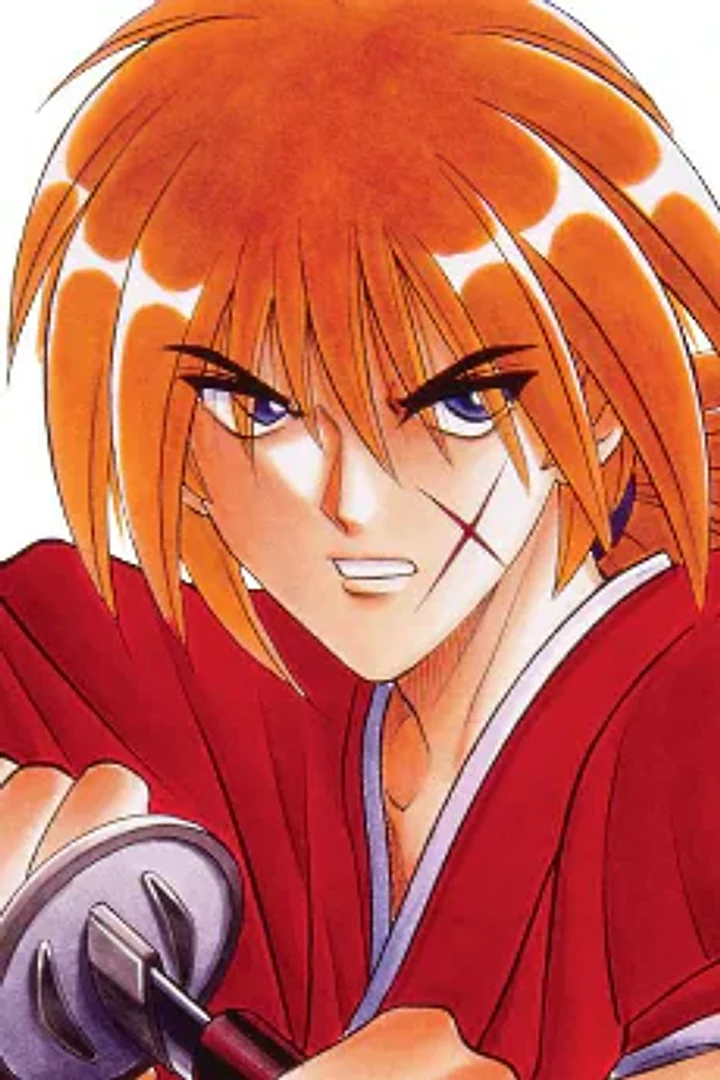
The cross-shaped scar makes the past visible even when Kenshin's expression and speech are gentle.
His red hair and simple wandering clothes create a recognisable silhouette that carries no official rank, fitting a protector who refuses institutional authority.
Adaptation notes
Manga versus anime
Nobuhiro Watsuki's manga is the source story. The 1996 television anime follows the early manga arcs before moving into substantial anime-original material after its Kyoto storyline.
The 2023 television anime starts the story again as a completely renewed production with new staff and cast; it is not a continuation of the 1996 series. The Trust & Betrayal OVA gives Kenshin's wartime past a darker, more restrained dramatic style than either television version.
Spoiler section
Ending and current status
The main profile avoids end-of-series outcomes and late identity or relationship reveals.
Ending and current-status coverage will only appear inside a dedicated, clearly labelled spoiler section.