Performance
Voice actors and performance
Performance credits are listed by release language and checked against the cited release sources.
Complete character analysis
Story, powers and development
Story spoilers ahead
The spoiler-safe introduction appears above. The sections below connect personality and abilities to relationships, defining moments, adaptation choices and current status.
Character study
Personality and motivation
- Analytical
- Calm under pressure
- Direct
- Protective of his research team
Power system
Abilities, powers and limitations
Abilities
- Monitoring spiritual populations and detecting dangerous changes in the balance between realms
- Tracking individual spiritual pressures across the Seireitei and maintaining long-distance communications
- Operating Senkaimon, laboratory barriers and emergency systems through the Research Department's infrastructure
- Coordinating analysts and relaying technical solutions to dispersed captains and lieutenants
Limits
- Most of Akon's strategic reach depends on laboratories, sensors, power and communication networks that an invading force can destroy.
- His Zanpakuto has not been revealed, so no release name or combat ability should be inferred from his rank.
- Akon can identify a crisis and create contact, but he cannot personally replace the frontline power needed to stop a Stern Ritter assault.
Character connections
Important relationships
- Mayuri Kurotsuchi is Akon's captain and department chief; Akon supplies steadier operational leadership when Mayuri's attention shifts to experiments or battle.
- Nemu Kurotsuchi works within the same division and embodies the overlap between Mayuri's research subjects, family claims and military personnel.
- Kisuke Urahara founded the Research Department and later sends the Bankai-recovery solution that Akon's institution helps distribute.
- Ichigo Kurosaki becomes Akon's urgent outside contact during the first invasion, when the laboratory needs a fighter the Stern Ritters cannot immediately counter.
- Rin Tsubokura and the other researchers depend on Akon to convert their observations into action during attacks on the control room.
Story progression
Defining moments
- Recognizing the mass disappearance of Hollows as a threat to realm balance helps establish that the coming war is already altering the world's structure.
- Contacting Ichigo and requesting immediate help bypasses damaged hierarchy in favor of the person most likely to change the battlefield.
- Keeping the communication open while the Research Department is attacked turns technical duty into direct personal risk.
- Helping transmit Urahara's method for reclaiming Bankai demonstrates how a discovery becomes useful only when infrastructure reaches every affected unit.
Visual language
Symbolism and visual design
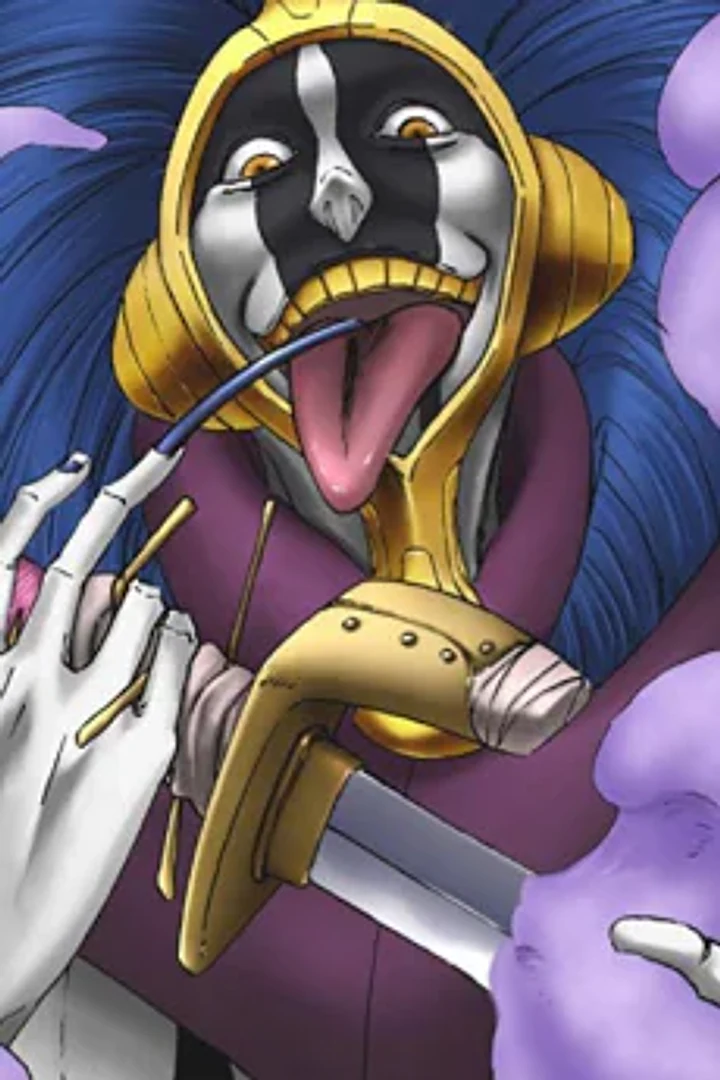
The small horns give Akon an altered silhouette suited to Squad 12, where scientific identity is often written directly onto the body.
Control-room screens turn invisible spiritual movement into readable patterns, matching Akon's role as an interpreter rather than a headline fighter.
His third-seat rank contrasts with the scale of systems he commands, showing that operational importance and formal hierarchy are not identical.
Adaptation notes
Manga versus anime
The manga gives Akon some of the final arc's most important connective work without turning him into a combat specialist. The limits of his equipment and the attack on the laboratory keep that support from feeling effortless.
Thousand-Year Blood War expands control-room procedure, staff reactions and the visual collapse of communications, giving Keiji Okuda more material to define Akon's calm Japanese performance. Anime additions clarify process but do not reveal a new Zanpakuto ability.
Spoiler section
Ending and current status
The main profile avoids end-of-series outcomes and late identity or relationship reveals.
Ending and current-status coverage will only appear inside a dedicated, clearly labelled spoiler section.