Performance
Voice actors and performance
Performance credits are listed by release language and checked against the cited release sources.
Complete character analysis
Story, powers and development
Story spoilers ahead
The spoiler-safe introduction appears above. The sections below connect personality and abilities to relationships, defining moments, adaptation choices and current status.
Character study
Personality and motivation
- Easygoing
- Perceptive
- Compassionate
- Ruthlessly practical when necessary
Power system
Abilities, powers and limitations
Abilities
- Wielding the paired blades of Katen Kyokotsu with deceptive reach and timing
- Turning children's games into binding combat rules through his Shikai
- Using high-level swordsmanship, Shunpo and spiritual pressure developed over centuries
- Employing a large-area Bankai whose staged effects make it dangerous to allies as well as enemies
Limits
- The rules created by Katen Kyokotsu apply to Kyoraku too, rewarding understanding rather than simple control.
- His Bankai affects a broad area and cannot be used responsibly when companions remain nearby.
- The relaxed persona can cause allies and opponents to underestimate how far he has already committed to a difficult decision.
Character connections
Important relationships
- Nanao Ise is Kyoraku's lieutenant and closest professional partner, supplying order, criticism and trust beneath their comic contrast.
- Jushiro Ukitake is his oldest friend and fellow student of Yamamoto, sharing a willingness to question Soul Society without abandoning it.
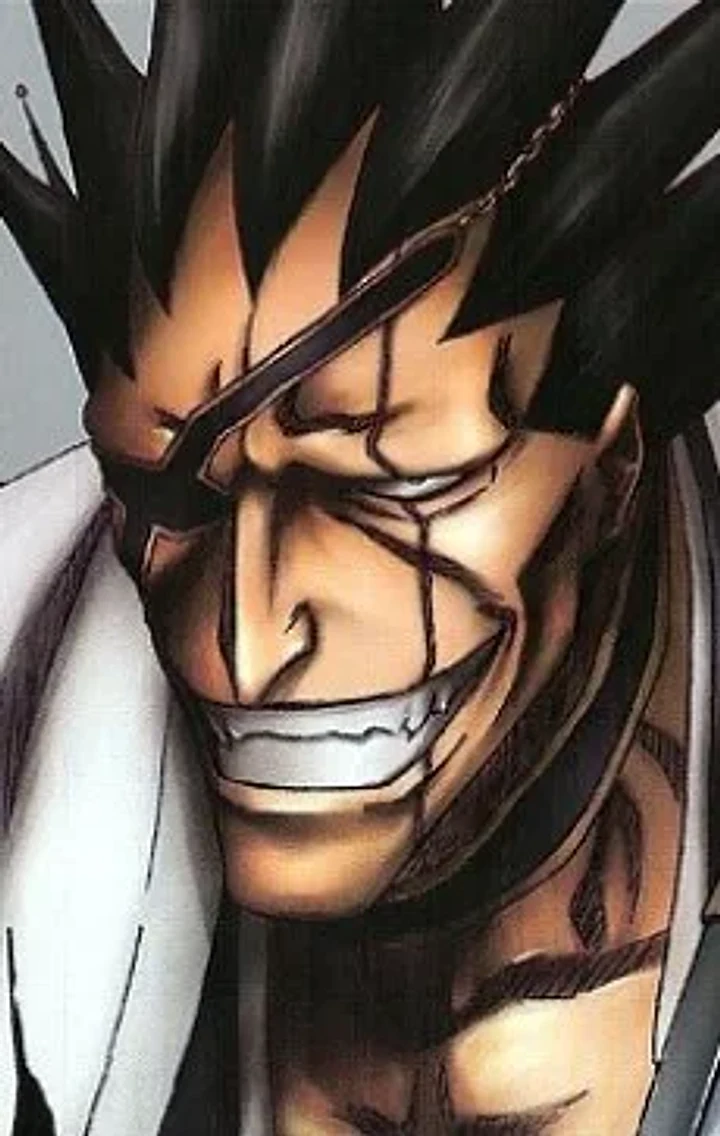
- Kenpachi Zaraki becomes part of Kyoraku's harshest wartime calculation when greater strength is needed regardless of the personal cost.
Story progression
Defining moments
- Choosing to oppose Rukia's execution alongside Ukitake proves that loyalty to Soul Society can include resistance to its judgment.
- Fighting Starrk with apparently playful rules reveals how quickly games become lethal once Kyoraku accepts the need to win.
- Assuming wartime command forces him to replace personal preference with decisions made for the survival of the entire institution.
Visual language
Symbolism and visual design
The flowered kimono softens a military uniform, holding pleasure and duty together in the same silhouette.
Children's games transformed into combat rules show innocence becoming dangerous when adults decide the stakes.
The shadow from his straw hat lets a genial face shift into secrecy, grief or resolve without changing costume.
Adaptation notes
Manga versus anime
Tite Kubo's manga uses Kyoraku sparingly at first, allowing later responsibilities and abilities to reframe his earlier ease. The 2004 anime adds captain interactions and anime-original missions around that established personality.
Bleach: Thousand-Year Blood War centres Kyoraku's transition into wartime leadership and adapts late revelations about Katen Kyokotsu. Specific losses and outcomes remain reserved for spoiler-marked coverage. Akio Otsuka voices Kyoraku in Japanese.
Spoiler section
Ending and current status
The main profile avoids end-of-series outcomes and late identity or relationship reveals.
Ending and current-status coverage will only appear inside a dedicated, clearly labelled spoiler section.