Performance
Voice actors and performance
Performance credits are listed by release language and checked against the cited release sources.
Complete character analysis
Story, powers and development
Story spoilers ahead
The spoiler-safe introduction appears above. The sections below connect personality and abilities to relationships, defining moments, adaptation choices and current status.
Character study
Personality and motivation
- Silent
- Watchful
- Emotionally unreadable
- Obedient under coercive creation
Power system
Abilities, powers and limitations
Abilities
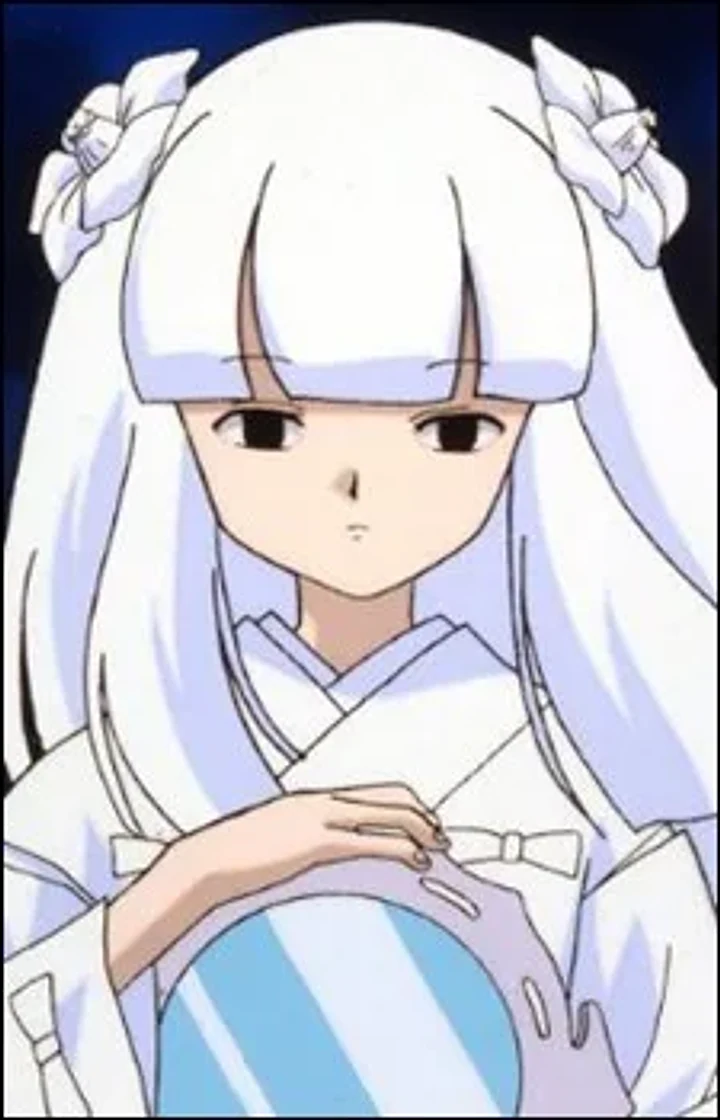
- Drawing human souls into a supernatural mirror
- Reflecting certain attacks back toward their source
- Using the mirror to observe distant people and events
- Concealing demonic presence through an unusually empty aura
Limits
- The mirror has limits on what it can contain or reflect, especially against unusually large spiritual power.
- Sacred attacks and damage to the mirror can disrupt the abilities on which Kanna depends.
- Naraku defines her missions and treats her existence as replaceable, leaving almost no safe space for independent action.
Character connections
Important relationships
- Naraku created Kanna and values her apparent lack of emotion, treating silence as proof that she can be controlled without resistance.
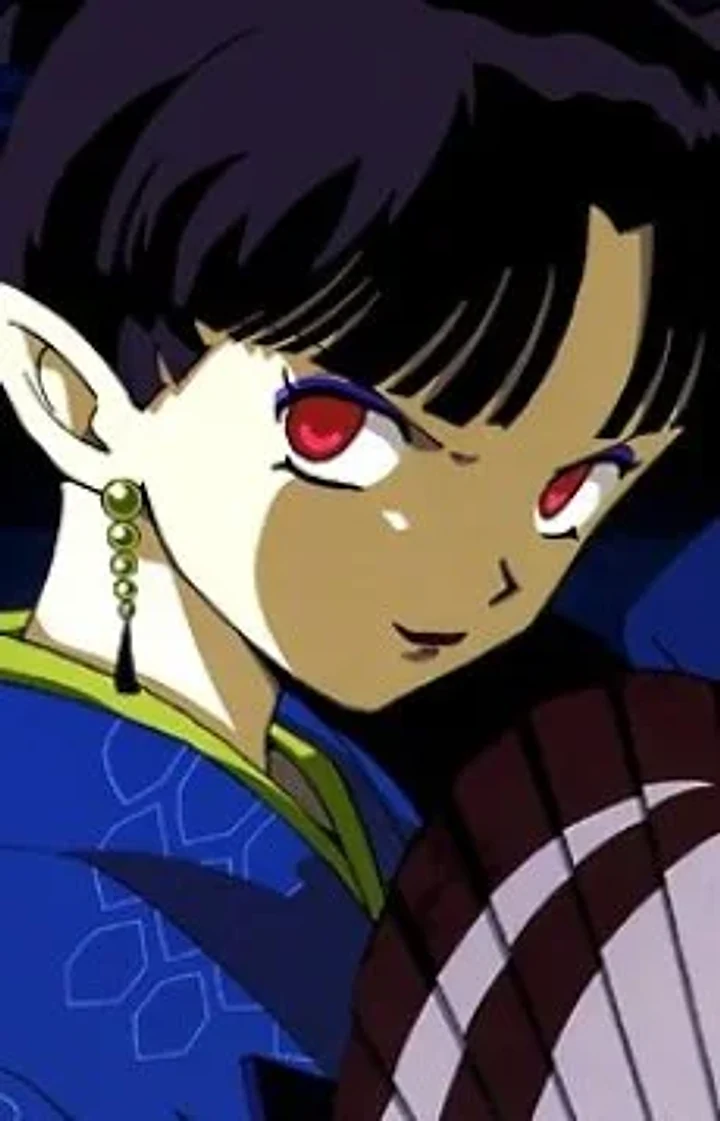
- Kagura is Kanna's younger sister among Naraku's incarnations, and their contrasting responses show defiance and compliance under the same creator.
- Kagome's unusually strong soul exceeds what Kanna's mirror can easily contain, turning their first confrontation into a limit on apparently absolute power.
Story progression
Defining moments
- Taking the souls of a village establishes the mirror as a threat that attacks identity rather than only the body.
- Failing to contain all of Kagome's soul reveals that Kanna's quiet power has boundaries and gives the group a way to resist.
- Continuing to observe the world through the mirror makes witnessing itself central to a character who is rarely permitted to state a judgement.
Visual language
Symbolism and visual design
The mirror presents other people's images and souls while withholding Kanna's own interior life.
White clothing and hair make her appear nearly colourless, matching Naraku's attempt to create a servant without personal desire.
A childlike form paired with an empty expression turns apparent innocence into unease without relying on physical aggression.
Adaptation notes
Manga versus anime
Rumiko Takahashi's manga establishes Kanna's mirror, silence and position among Naraku's incarnations. The 2000 anime expands the duration of several encounters while preserving her restrained presentation.
Inuyasha: The Final Act adapts her remaining manga material within a compressed run, giving later changes less connective screen time. Yukana voices Kanna in Japanese.
Spoiler section
Ending and current status
The main profile avoids end-of-series outcomes and late identity or relationship reveals.
Ending and current-status coverage will only appear inside a dedicated, clearly labelled spoiler section.