Performance
Voice actors and performance
Performance credits are listed by release language and checked against the cited release sources.
Complete character analysis
Story, powers and development
Story spoilers ahead
The spoiler-safe introduction appears above. The sections below connect personality and abilities to relationships, defining moments, adaptation choices and current status.
Character study
Personality and motivation
- Confident
- Direct
- Protective of his tribe
- Impulsive when challenged
Power system
Abilities, powers and limitations
Abilities
- Running at extreme speed with Shikon shards embedded in his legs
- Using strong claws, kicks and close-range demonic combat
- Tracking by scent and navigating territory with wolf-demon senses
- Leading and coordinating members of the wolf-demon tribe
Limits
- Much of Koga's signature speed initially depends on Jewel shards that enemies can target, corrupt or attempt to remove.
- Charging ahead can separate him from support and expose his tribe to plans built around his reactions.
- His possessive declarations about Kagome ignore her agency and intensify conflict that cooperation could avoid.
Character connections
Important relationships
- Kagome shows Koga compassion without accepting his claim that she belongs to him, separating genuine concern from his one-sided romantic certainty.
- Inuyasha is Koga's rival and recurring ally, with jealousy and insults sitting beside growing confidence that each will fight Naraku when it matters.
- Ginta, Hakkaku and the wider wolf-demon tribe depend on Koga's leadership, giving his pursuit of Naraku stakes beyond pride or personal revenge.
Story progression
Defining moments
- Abducting Kagome to use her Jewel-sensing ability introduces Koga's ruthless approach to leadership before her compassion complicates his assumptions.
- Fighting beside Inuyasha against a common threat shows that rivalry does not prevent tactical cooperation.
- Pursuing Naraku after the massacre of fellow wolf demons turns scattered conflict into a responsibility Koga carries for his people.
Visual language
Symbolism and visual design
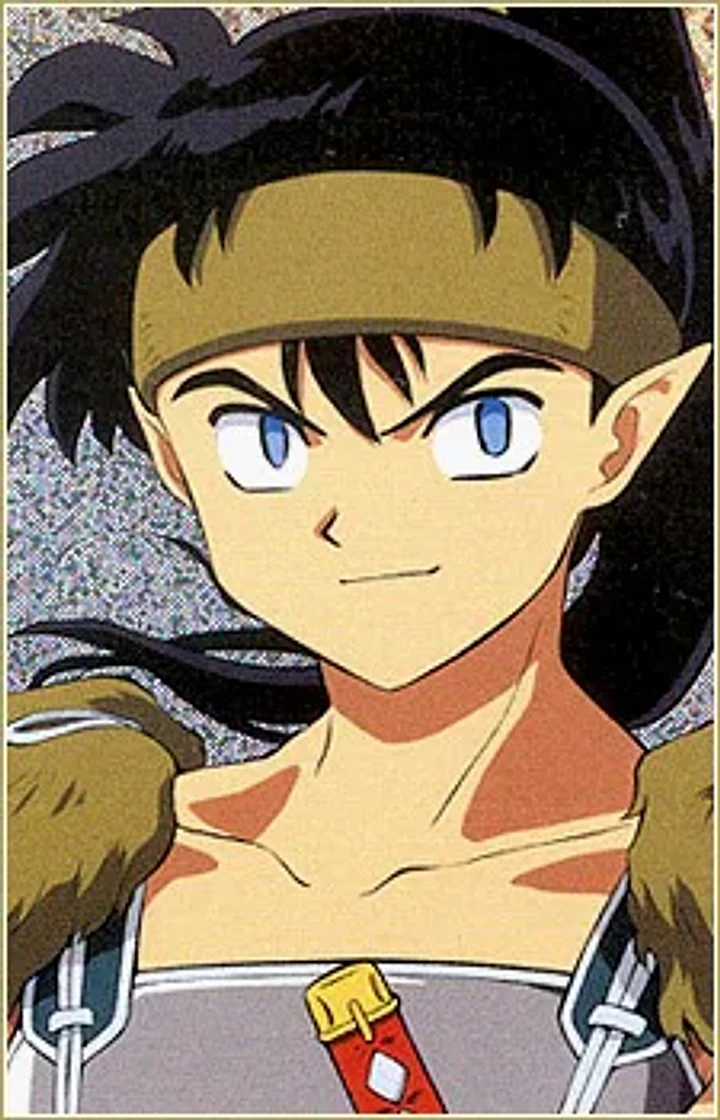
The whirlwind around Koga's movement turns speed into a visible statement of personality: direct, disruptive and difficult to slow down.
Shikon shards in his legs make borrowed power part of his body, tying mobility to an object that also attracts danger.
Wolf pelts and armour identify leadership through the pack rather than through the castles and titles used by human rulers.
Adaptation notes
Manga versus anime
The manga provides Koga's principal rivalry, pursuit of Naraku and connection to Kagome. The 2000 television anime expands his appearances and introduces Ayame and her history with Koga as anime-original material.
Inuyasha: The Final Act adapts Koga's remaining manga role within its compressed 26-episode run. Taiki Matsuno voices Koga in Japanese.
Spoiler section
Ending and current status
The main profile avoids end-of-series outcomes and late identity or relationship reveals.
Ending and current-status coverage will only appear inside a dedicated, clearly labelled spoiler section.