Performance
Voice actors and performance
Performance credits are listed by release language and checked against the cited release sources.
Complete character analysis
Story, powers and development
Story spoilers ahead
The spoiler-safe introduction appears above. The sections below connect personality and abilities to relationships, defining moments, adaptation choices and current status.
Character study
Personality and motivation
- Gentle
- Watchful
- Burdened by guilt
- Quietly determined
Power system
Abilities, powers and limitations
Abilities
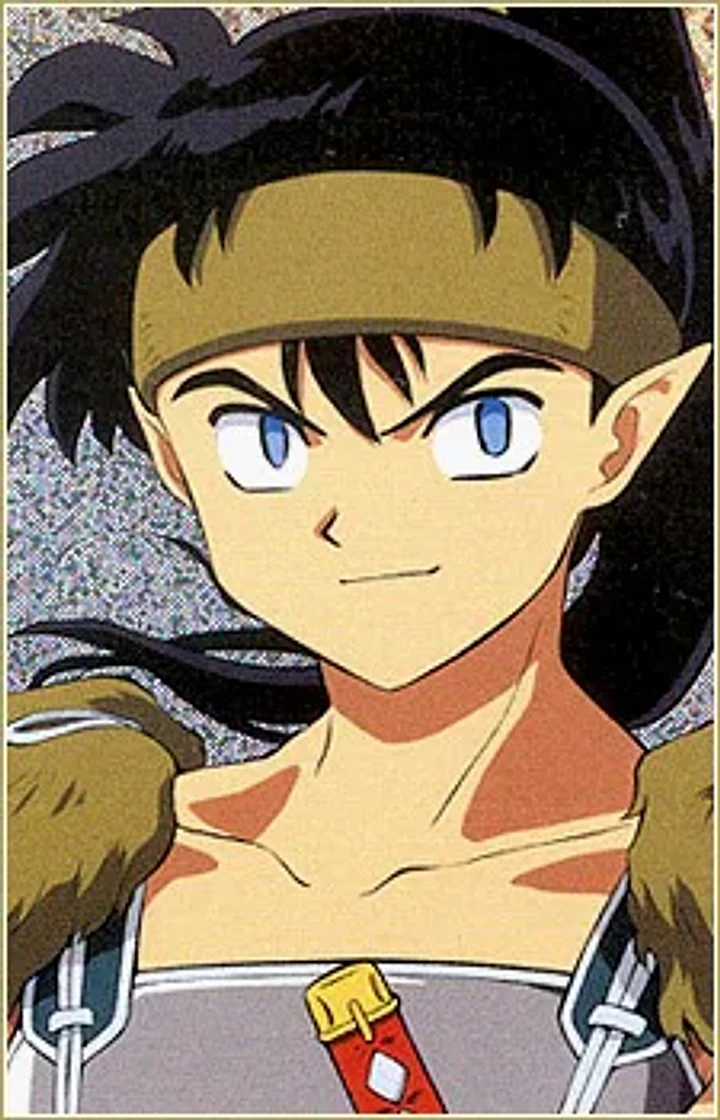
- Fighting with a chained sickle at close and middle range
- Using demon-slayer training to track threats and identify weaknesses
- Moving with the speed and agility required for coordinated hunting
- Concealing intention while operating under close enemy supervision
Limits
- Kohaku is young and was still inexperienced when Naraku first forced him into combat.
- The Shikon shard sustaining him makes his life vulnerable to anyone able to remove, corrupt or control it.
- Trauma, manipulated memory and guilt can interrupt judgement even after he begins recognising the truth.
Character connections
Important relationships
- Sango is Kohaku's elder sister and strongest connection to his former life, making her hope a source of protection that Naraku repeatedly exploits.
- Naraku controls Kohaku through memory, surveillance and the Shikon shard, treating a traumatised child as both weapon and leverage.
- Rin meets Kohaku without reducing him to his past actions, creating moments of ordinary trust within a life organised around secrecy.
Story progression
Defining moments
- Being controlled during his first major demon-slayer mission turns a rite of passage into the event that destroys his family.
- Returning alive without an accessible memory of the massacre gives Sango hope while revealing the mechanism Naraku uses to control both siblings.
- Showing flashes of recognition while remaining outwardly obedient marks the beginning of an internal struggle that cannot yet be fought openly.
Visual language
Symbolism and visual design
The chain attached to Kohaku's sickle gives his weapon reach while visually echoing the control that keeps him from acting freely.
The Shikon shard preserves life and enables exploitation at the same time, making survival inseparable from the enemy's leverage.
Demon-slayer clothing links Kohaku to a community he can barely remember and to the professional identity he was never allowed to develop normally.
Adaptation notes
Manga versus anime
The manga establishes Kohaku's trauma, concealed awareness and role in Sango's conflict with Naraku. The 2000 anime adds connective scenes and encounters that extend the uncertainty around his memory.
Inuyasha: The Final Act adapts his later manga storyline at a compressed pace, so several shifts in alliance and intent arrive more quickly on screen. Akiko Yajima voices Kohaku in the principal Japanese anime.
Spoiler section
Ending and current status
The main profile avoids end-of-series outcomes and late identity or relationship reveals.
Ending and current-status coverage will only appear inside a dedicated, clearly labelled spoiler section.